
The AI technology trends 2026 are no longer a forecast — they are already reshaping how companies hire, build, and compete. If you are still treating artificial intelligence as a background conversation, this year is the one where that assumption starts costing you. From boardrooms to factory floors, the shift is visible, rapid, and in many cases, irreversible.
This article breaks down the eight most significant AI technology trends in 2026 that professionals, business leaders, and educators need to understand right now.
Table of Contents
1. Agentic AI: The Biggest AI Technology Trend of 2026
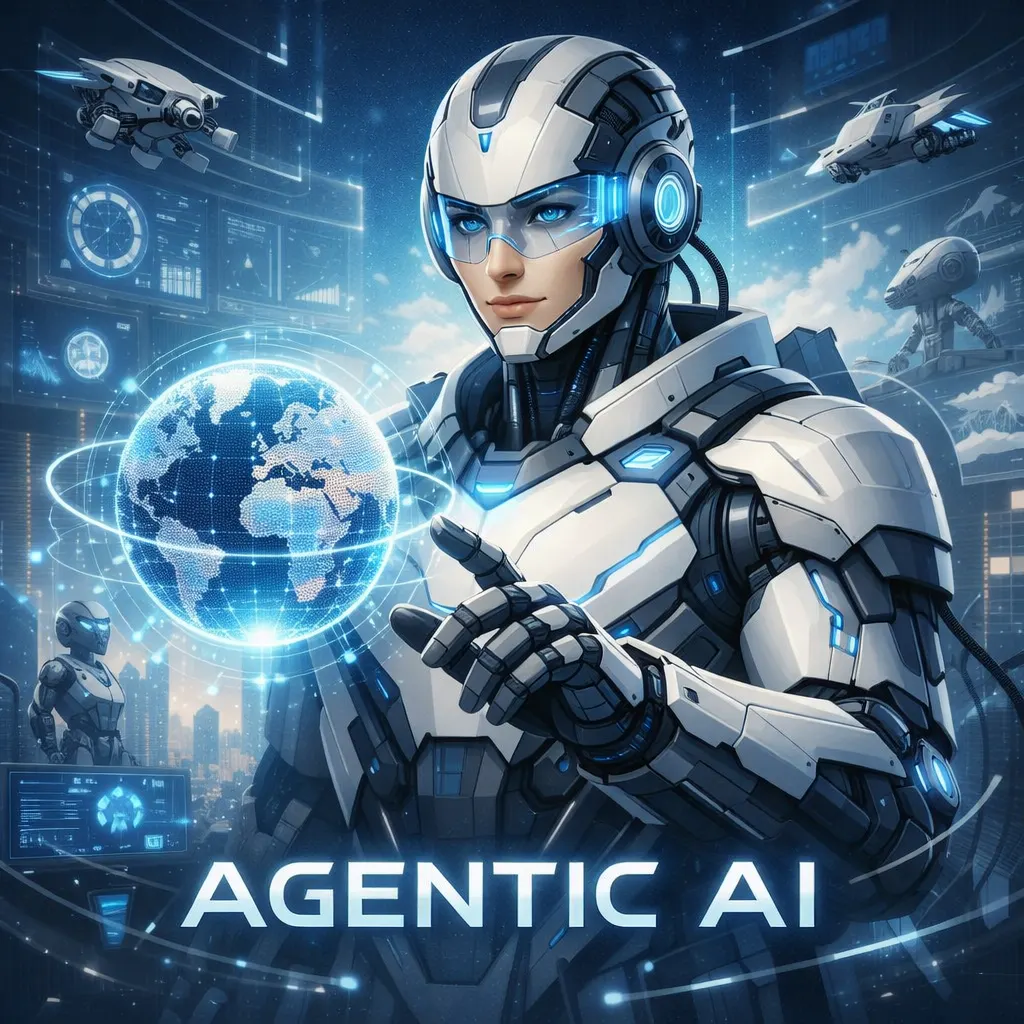
The most discussed shift in AI technology trends 2026 is the move from AI that answers questions to AI that completes tasks.
Agentic AI systems don’t wait for your next prompt. They plan a sequence of steps, make decisions mid-process, and deliver outcomes — not just responses. Businesses using these systems describe the experience less like using software and more like briefing a capable team member.
Real-world examples already in use include AI that books travel and manages schedules, agents that write, test, and debug code without human handholding, and systems that conduct competitive research and produce structured reports automatically.
The risk of ignoring this trend: teams that adapt to agentic workflows are compressing weeks of work into hours. Those that don’t are falling further behind with every passing month.
2. Physical AI and Robotics: Where AI Technology Meets the Real World
If generative AI was about words and images, the next chapter of AI technology trends 2026 is about physical movement and real-world judgment.
Physical AI refers to machines that don’t simply execute programmed commands — they interpret environments, adapt to unexpected situations, and make contextual decisions in real time. Factories, warehouses, and hospital systems are making significant infrastructure bets on this shift right now.
The gap between a robot that follows a fixed script and one that handles novel situations is enormous — and that gap is closing faster than most industries have planned for.
3. AI Security: The Dark Side of 2026’s AI Technology Trends
No discussion of AI technology trends 2026 is complete without addressing cybersecurity — and the picture is genuinely unsettling.
AI is simultaneously making attacks more sophisticated and defenses more powerful. Phishing emails that used to get caught by a spelling mistake are now flawless. Social engineering that required skilled human operators can now be automated at scale. Meanwhile, AI-powered threat detection is enabling security teams to identify anomalies in milliseconds rather than hours.
The organizations navigating this well are not necessarily spending more on tools. They are thinking more carefully about how AI changes their threat model — which is a harder, more human problem than any product can solve.
4. AI-Native Software Development Is Rewriting the Job
One of the most tangible AI technology trends in 2026 for tech teams is the transformation of software development itself.
Developers are no longer staring at a blank file. They are opening a draft. AI writes substantial portions of the code; the developer’s job shifts toward judgment, review, and architectural thinking. Small teams are shipping products that would have required full departments just three years ago.
This changes how junior developers build experience, how code review works, and ultimately how much software the global economy can produce. Both the opportunity and the disruption are real — and both are accelerating.
5. AI Infrastructure: The Invisible Engine Behind Every AI Technology Trend in 2026
Behind every AI interaction is a facility consuming enormous amounts of electricity, using specialized chips, and relying on high-bandwidth infrastructure that most users never think about.
The AI infrastructure buildout underway in 2026 is one of the largest capital investments in modern technology history. Data centers are being sited near power sources. Chip supply constraints are influencing geopolitical relationships. Regional energy grids are being redesigned.
None of this is visible in the user experience — but it is shaping who can access AI capabilities, at what cost, and with what latency. Companies building on top of AI need to understand this layer even if they never touch it directly.
6. Domain-Specific AI Models: Smarter Where It Actually Matters
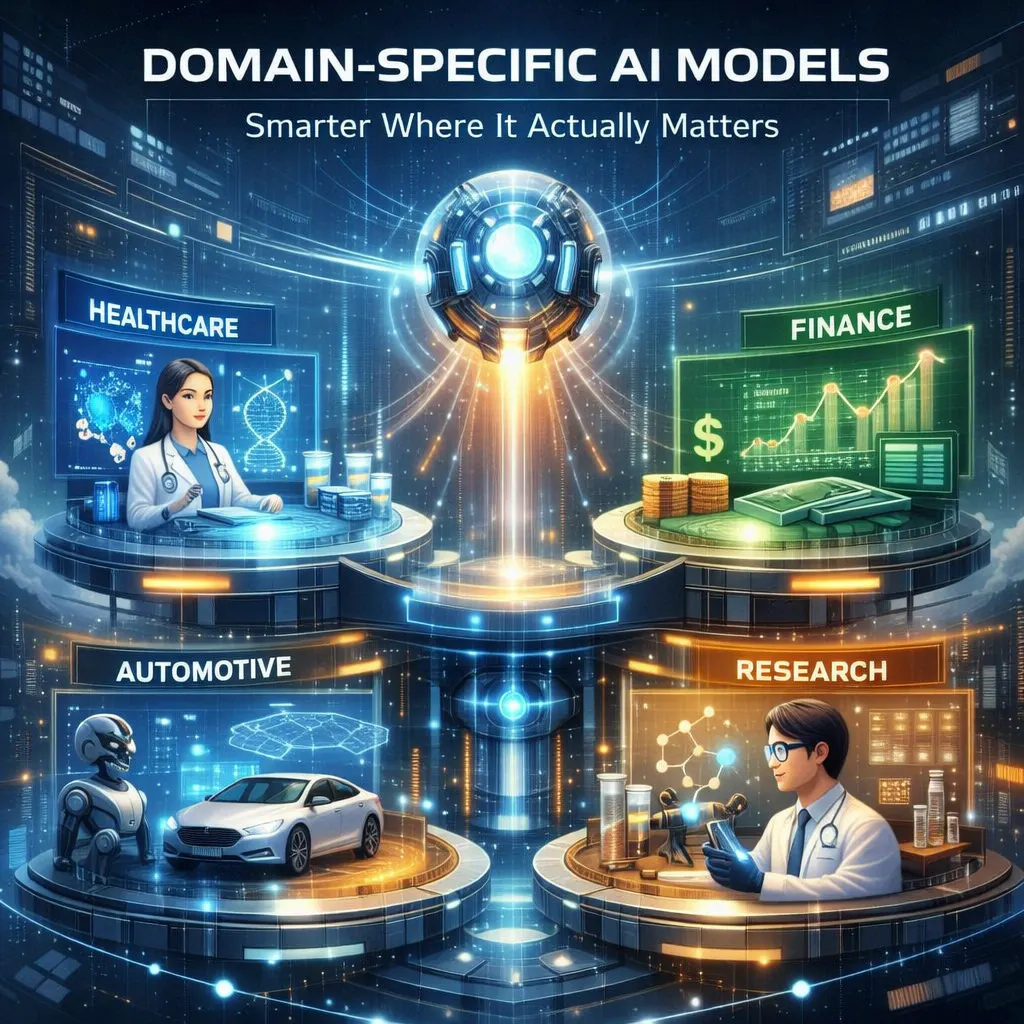
A general-purpose AI model knows a little about everything. A model trained deeply on clinical data, legal frameworks, or manufacturing systems knows your specific domain in a way that changes outcomes.
The AI technology trends 2026 show a clear market shift toward domain-specific models — particularly in healthcare, law, finance, and education. The reason is straightforward: when AI is being used for high-stakes decisions, “broadly capable” is not good enough. Accuracy for your specific context is what matters.
Organizations that deploy specialized models for their core workflows are reporting meaningfully better results than those relying on general-purpose tools for everything.
7. AI Sovereignty: Governments Are Taking Control
There’s a pattern in how nations treat critical infrastructure. At a certain point, it stops being a market question and becomes a sovereignty question.
That moment has arrived for AI technology. Among the most consequential AI technology trends 2026 is the rise of national AI strategy — countries investing in domestic AI infrastructure, enforcing data localization, and designing systems that can operate independently of foreign platforms.
This is reshaping cloud strategy, international technology partnerships, and the regulatory landscape in ways that will take years to fully unfold. Any business operating across borders needs to be watching this closely.
8. Quantum Computing: The AI Technology Trend You Need to Prepare For Early
Quantum computing does not have major commercial impact today. That framing needs to come first, because the hype cycle around this technology has been misleading for years.
What is true in 2026 is that the transition from “quantum might matter someday” to “quantum matters now” could happen faster than most organizations can prepare for — particularly around cryptography. The single most practical step for businesses right now is understanding their cryptographic exposure and beginning a migration toward post-quantum encryption standards. That work needs to happen before quantum becomes urgent, because retrofitting encryption is slow and expensive.
Why These AI Technology Trends in 2026 Can’t Be Ignored
Taken together, the AI technology trends 2026 represent something larger than any individual technology. AI is leaving the research lab and the chat window and becoming embedded in physical infrastructure, software supply chains, national policy, and daily business operations.
The professionals and organizations that will navigate this transition well are not necessarily those who understand AI in the abstract. They are the ones who understand how AI interacts with everything else — regulations, energy, security, workforce dynamics, and human judgment.
That understanding starts with knowing what is actually changing. Now you do.
Read our other blog – https://edutechskills.co.in/ai-news-this-week/

1 thought on “8 AI Technology Trends 2026 Every Professional Must Know (Mistakes You Can’t Afford to Miss)”